famous places for khukuri in nepal
2025-12-24
13 min read
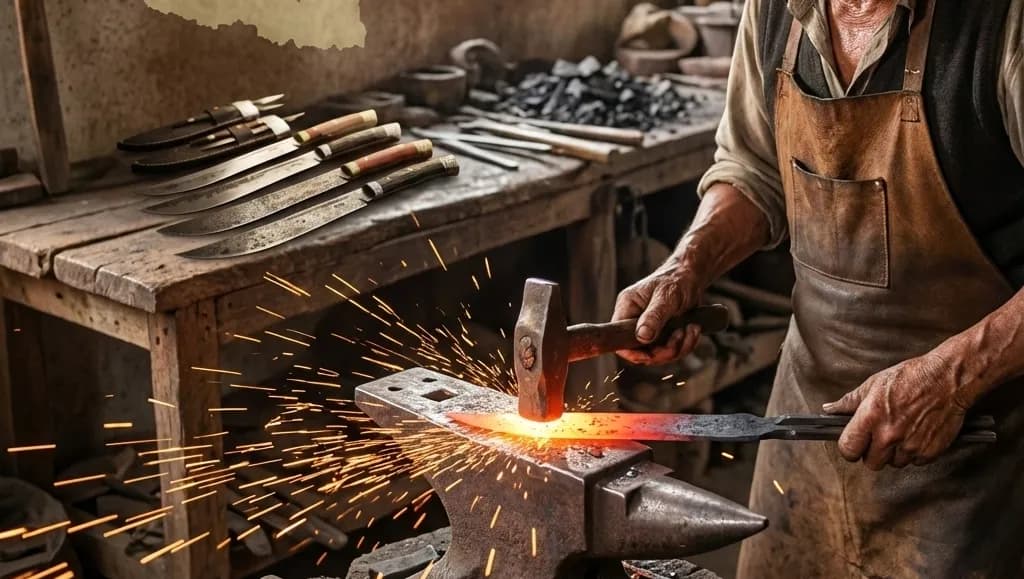
The production of authentic Khukuris is concentrated in specific regions of Nepal, each with distinctive traditions, techniques, and characteristic blade styles. These areas have become centers of excellence, where master craftsmen, known as Kamis (blacksmiths), continue centuries-old forging practices. The region where a Khukuri is made often determines its unique characteristics, making the place of origin a crucial identifier of authenticity and quality.
This guide explores the three primary hubs of Khukuri production in Nepal, each with its own character, specialties, and historical significance.
Bhojpur District: The Heartland of Traditional Khukuri
The Legendary Home of the Finest Khukuri
Located in eastern Nepal's hills, Bhojpur District has earned the reputation as the spiritual and practical home of the finest traditional Khukuri. For centuries, the Kami (blacksmith caste) communities of Bhojpur have perfected the art of Khukuri forging, producing blades that connoisseurs and collectors consider the finest examples of the craft.
Location Details:
-
Province: Koshi Province (formerly Province 1)
-
District Capital: Bhojpur Bazaar
-
Elevation: 1,500-2,000 meters
-
Distance from Kathmandu: Approximately 380 km east
-
Access: Fly to Biratnagar, then a 6-7 hour drive; or bus from Kathmandu (12-14 hours)
Why Bhojpur Khukuri Are Legendary
Several factors make Bhojpur Khukuri exceptional:
-
Generational Expertise
Bhojpur’s Kami blacksmiths have been forging Khukuri for 300–400 years, passing skills from father to son. Each generation has refined techniques, maintaining exceptional quality. -
Traditional Methods
Unlike modern factories, Bhojpur artisans largely use hand-forging techniques unchanged for centuries, producing blades with characteristics that mass production cannot replicate. -
Quality Materials
They carefully select high-carbon steel for strength, and premium materials like rosewood, buffalo horn, and brass for handles, ensuring durability, balance, and meticulous finishing. -
Blade Geometry
Bhojpur Khukuri features precise curvature, weight distribution, and edge angles, honed over generations, delivering optimal cutting performance and lasting durability.
Famous Villages and Artisan Communities
Chainpur Area
Chainpur and surrounding villages have the highest concentration of traditional Khukuri makers in Bhojpur. Walking through these villages, you'll hear the rhythmic hammering of metal and see smoke rising from small forges.
-
Production style: Almost entirely hand-forged
-
Specialization: High-quality traditional Khukuri
-
Notable: Some smiths create custom pieces for collectors worldwide
Bhojpur Bazaar
The district capital serves as the commercial center where Khukuri from surrounding villages are sold. Several shops specialize in authentic locally-made Khukuri, though quality varies.
Taksar Village
Known for producing some of the finest ceremonial Khukuri, Taksar's smiths specialize in ornate pieces with detailed handle work and premium finishing.
What Makes a Bhojpur Khukuri Distinctive
Physical Characteristics:
-
Balance: Exceptional weight distribution for effortless chopping
-
Curve: Precise geometry developed over generations
-
Finish: Hand-polished to high standards
-
Fittings: Quality brass work on handles and sheaths
-
Edge: Superior edge retention due to proper heat treatment
Traditional Features:
-
Full-tang construction (blade extends through handle)
-
Proper notch (Kaudi/Cho) near handle
-
Includes two accompanying knives (Karda and Chakmak)
-
Hand-stitched leather or wood scabbard
-
Brass or silver fittings
Challenges Facing Bhojpur's Traditional Craft
Despite the region's legendary status, challenges threaten traditional production:
Economic Pressure:
-
Young people migrating to cities or abroad for better income
-
Competition from mass-produced Khukuri
-
Difficulty competing on price with factory production
Skill Transmission:
-
Fewer young people are learning the craft
-
Some family traditions end as sons pursue other careers
-
Knowledge of traditional techniques is at risk
Market Access:
-
Limited direct access to international buyers
-
Middlemen are taking large profit margins
-
Difficulty marketing traditional quality
2. Dharan: The Commercial Manufacturing Hub
Nepal's Khukuri Industrial Center
Dharan, a sub-metropolitan city in eastern Nepal's Sunsari District, has emerged as the country's primary center for commercial Khukuri production. While lacking Bhojpur's centuries-old artisan tradition, Dharan combines modern manufacturing capabilities with skilled craftsmanship to produce Khukuri for domestic and international markets.
Location Details:
-
Province: Koshi Province
-
Population: Approximately 160,000
-
Elevation: 370 meters (1,214 feet)
-
Distance from Kathmandu: 310 km east
-
Access: Well-connected by road and air (Biratnagar Airport 20 km away)
The Development of Dharan's Khukuri Industry
Historical Background:
Dharan's Khukuri industry developed relatively recently compared to Bhojpur's ancient tradition. Several factors contributed to its growth:
-
Military Presence: British Gurkha Recruitment Center established in Dharan
-
Strategic Location: Accessible location on major highways
-
Infrastructure: Better electricity and transportation than the hill districts
-
Market Access: Proximity to the Indian border for export
Growth Period (1960s-1990s):
The industry expanded significantly when Gurkha veterans and their families settled in Dharan after military service. Many brought metalworking skills and capital, establishing workshops that combined traditional knowledge with modern production methods.
Types of Production in Dharan
Dharan's Khukuri industry encompasses several production models:
1. Semi-Industrial Workshops
Medium-sized operations employing 10-30 workers:
-
Use power hammers and grinding equipment
-
Produce 100-500 Khukuri monthly
-
Balance efficiency with quality craftsmanship
-
Cater to the domestic market and tourist trade
2. Factory-Style Production
Larger facilities with more mechanization:
-
Employ 50+ workers
-
Use automated processes for certain steps
-
Produce 1,000+ Khukuri monthly
-
Focus on consistent quality at scale
-
Primary suppliers to military and export markets
3. Small Artisan Workshops
Traditional-style operations within Dharan:
-
Family-run businesses with 2-5 workers
-
More hand-work in production
-
Produce 20-50 premium pieces monthly
-
Serve collectors and custom order clients
What Dharan Produces
Product Range:
Military Service Khukuri:
-
Standard issue for the Nepal Army
-
Gurkha Regiment service patterns
-
Meeting specific military specifications
-
Bulk orders for military units
Commercial/Tourist Khukuri:
-
Decorative pieces for the tourist market
-
Varied quality levels and price points
-
Branded products for export
-
Souvenir-grade to quality pieces
Dharan's Role in Khukuri Trade
Domestic Market:
-
Primary supplier to Nepal's military and police
-
Main source for ceremonial Khukuri
-
Supplies rural hardware shops across eastern Nepal
Export Market:
-
Major supplier to international Khukuri retailers
-
Container shipments to the USA, UK, and Europe
-
Growing online sales presence
-
Military surplus and collector markets
Tourist Market:
-
Supplies shops in Kathmandu, Pokhara
-
Direct sales to tourists visiting Dharan
-
Growing reputation among the backpacker circuit
3. Kathmandu: The Export and Tourist Center
Nepal's Capital and Global Khukuri Gateway
While Kathmandu doesn't have the traditional Khukuri-making heritage of Bhojpur or the manufacturing scale of Dharan, the capital city plays a crucial role in the Khukuri trade as the primary point of sale for tourists and the hub for international export.
Location Details:
-
Province: Bagmati Province
-
Population: ~1.5 million (Kathmandu Valley)
-
Elevation: 1,400 meters (4,600 feet)
-
International Access: Tribhuvan International Airport
Kathmandu's Khukuri Landscape
Primary Retail Districts:
1. Thamel Tourist District
The backpacker and tourist hub contains dozens of shops selling Khukuri:
-
Density: 50+ shops selling Khukuri
-
Quality: Highly variable - from tourist-grade decorative pieces to quality examples
-
Pricing: Generally marked up 2-5x over source prices
-
Negotiation: Expected and necessary
-
Authenticity: Mixed - genuine pieces alongside imports and reproductions
2. Asan Tole (Traditional Market)
The old marketplace offers a more authentic shopping experience:
-
Character: Traditional hardware shops among general merchandise
-
Quality: Generally better than Thamel tourist shops
-
Pricing: More reasonable, less tourist markup
-
Experience: Requires more searching and less English spoken
-
Authenticity: Higher percentage of genuine Nepali-made pieces
3. Specialized Khukuri Shops
Several dedicated Khukuri retailers cater to serious buyers:
-
Focus on quality pieces
-
Knowledgeable staff
-
Direct relationships with manufacturers
-
Certificate of authenticity
-
Higher prices but reliable quality
-
Some offer shipping services
Other Khukuri-Making Regions
While Bhojpur, Dharan, and Kathmandu dominate, other areas produce Khukuri:
Pokhara
Nepal's second tourist city has a growing Khukuri retail sector:
-
Primarily selling pieces made elsewhere
-
Some local workshops
-
Geared toward the tourist market
-
Quality similar to Kathmandu tourist areas
Lamjung District
Traditional production area north of Pokhara:
-
Historical Khukuri-making villages
-
Maintains some traditional production
-
Less commercialized than major centers
-
Difficult to access for most buyers
Gorkha District
Historical significance as the original home of Gurkha warriors:
-
Some traditional production continues
-
Cultural heritage site
-
Limited commercial production
-
More symbolic than practical for buyers
Comparing the Three Major Centers
|
Aspect |
Bhojpur |
Dharan |
Kathmandu |
|
Production Style |
Traditional hand-forging |
Semi-industrial |
Limited production |
|
Quality Reputation |
Highest |
Variable |
Depends on the source |
|
Price Level |
High (justified) |
Moderate |
Highest retail markup |
|
Accessibility |
Difficult |
Easy |
Very easy |
|
Tourist Experience |
Authentic but basic |
Moderate |
Convenient |
|
Best For |
Collectors, authenticity seekers |
Value, variety |
Convenience, shipping |
|
Production Volume |
Low |
High |
N/A (retail only) |
|
Specialization |
Premium traditional |
Commercial/military |
Retail/export |
Regional Purchasing Recommendations
If You're Seeking:
Maximum Authenticity: → Visit Bhojpur directly or commission through reputable dealers who source from Bhojpur smiths
Best Value: → Purchase from established Dharan manufacturers or their Kathmandu representatives
Convenience: → Shop in Kathmandu's specialized retailers with authentication and shipping services
Custom Commission: → Contact Bhojpur artisans through intermediaries or commission through Dharan manufacturers
Military-Spec Service Khukuri: → Dharan manufacturers supply military units and offer same specifications to civilians.
The Future of Regional Khukuri Production
Challenges:
-
Maintaining traditional skills as the younger generation migrates
-
Competition from cheap imports (India, China)
-
Economic pressure on traditional artisans
-
Balancing modernization with tradition
Opportunities:
-
Growing international collector market
-
Premium pricing for authentic traditional pieces
-
Tourism brings awareness and sales
-
Online marketing reaches global buyers
-
Government support for traditional crafts
Trends:
-
Increasing cooperation between regions
-
Bhojpur blades are sold through Dharan and Kathmandu
-
Certification and authenticity initiatives
-
Direct-to-consumer online sales
-
Custom commissions from international buyers
The Geography of Khukuri Craftsmanship
While the Khukuri is recognized worldwide as Nepal's iconic blade, its production has always been concentrated in specific regions where the craft has been perfected over generations. Understanding where Khukuris are made provides insight into the blade's quality, authenticity, and the cultural traditions that sustain this ancient craft.
This guide explores the three primary hubs of Khukuri production in Nepal, each with its own character, specialties, and historical significance. From the legendary blacksmith villages of Bhojpur to the commercial manufacturing centers of Dharan and the export-focused workshops of Kathmandu, each location contributes uniquely to the Khukuri tradition.